
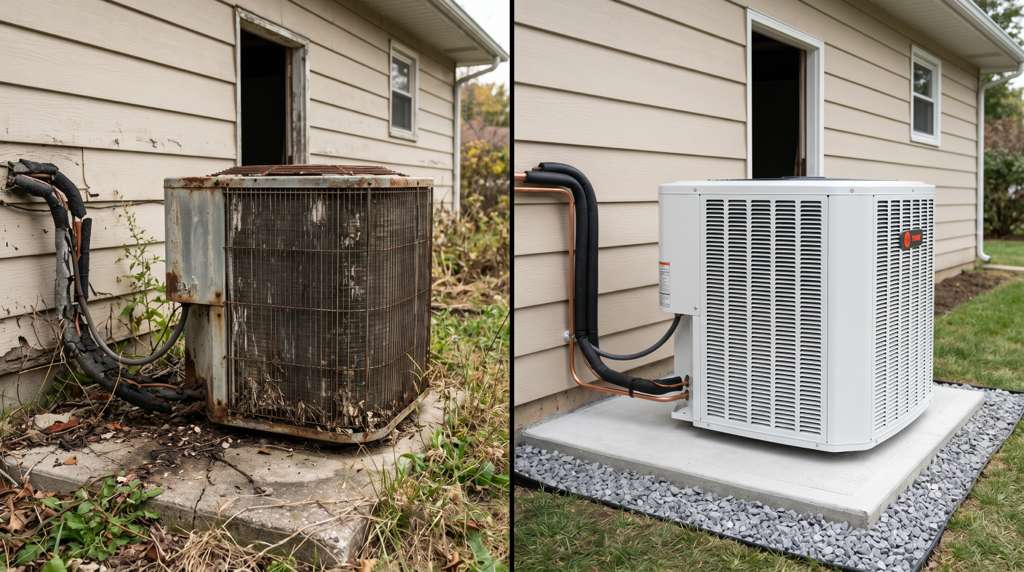
Your HVAC system is one of the most expensive — and most important — systems in your home. When it fails or becomes too inefficient to run cost-effectively, replacement is often the smarter choice over repair. Here’s what a new HVAC system costs in 2026, and what drives those numbers.
HVAC Replacement Cost at a Glance
| System Type | Equipment Cost | Installed Total |
| Central Air Conditioner Only | $1,500 – $4,000 | $3,000 – $7,500 |
| Gas Furnace Only | $800 – $2,500 | $2,500 – $6,000 |
| Split System (AC + Furnace) | $3,000 – $7,000 | $6,000 – $14,000 |
| Heat Pump (replaces both) | $3,500 – $8,000 | $7,000 – $15,000 |
| Mini-Split (ductless) | $700 – $2,500/zone | $2,000 – $5,000/zone |
Most homeowners spend $6,000 to $12,000 for a complete central HVAC replacement (both heating and cooling) in a typical single-family home. Costs vary significantly based on system type, home size, and whether existing ductwork needs repair or replacement.
Key Cost Factors
System Size (Tonnage)
HVAC systems are sized in ‘tons’ of cooling capacity. A correctly sized system for your home is critical — undersized systems run constantly; oversized systems cycle on and off too frequently, both wasting energy. A load calculation by a licensed HVAC technician determines the right size.
| Home Size | Recommended Tonnage | Rough Equipment Cost |
| Under 1,000 sq ft | 1.5 – 2 tons | $1,500 – $3,500 |
| 1,000 – 1,600 sq ft | 2 – 2.5 tons | $2,000 – $4,500 |
| 1,600 – 2,200 sq ft | 2.5 – 3.5 tons | $2,500 – $5,500 |
| 2,200 – 3,000 sq ft | 3.5 – 5 tons | $3,500 – $7,000 |
SEER Rating (Efficiency)
SEER (Seasonal Energy Efficiency Ratio) measures how efficiently an AC unit operates. Federal minimums in 2026 are 14–15 SEER depending on climate region. Higher SEER ratings (18–25) cost $500–$2,000 more upfront but lower monthly energy bills by 20–40%.
Ductwork Condition
If your existing ductwork is leaking, poorly insulated, or incorrectly sized, a new HVAC system won’t perform to its rated efficiency. Ductwork repairs cost $300–$1,000; full duct replacement can run $2,000–$6,000 for a whole house.
Heat Pump vs. Traditional System
Heat pumps handle both heating and cooling in a single system and are significantly more energy-efficient than gas furnaces in moderate climates. They cost more upfront but often qualify for federal tax credits (up to $2,000 under the Inflation Reduction Act) and utility rebates.
Signs You Need a Replacement (Not Just a Repair)
- System is 15+ years old (AC) or 20+ years old (furnace)
- Repair costs exceed 50% of the replacement cost
- Energy bills have increased significantly without a change in usage
- System needs frequent repairs — more than once per year
- Inconsistent temperatures throughout the home
- Unusual noises, excess humidity, or poor air quality
Available Rebates and Tax Credits
Federal tax credits under the Inflation Reduction Act cover up to 30% of costs (maximum $2,000) for qualifying heat pumps and high-efficiency systems. Many state and utility programs offer additional rebates of $200–$1,500. Always check dsireusa.org for current programs in your state before purchasing.
Tips to Save Money
- Get quotes from at least 3 licensed HVAC contractors — prices vary by up to 30–40% for identical systems
- Replace in spring or autumn (off-peak season) — contractors often discount during slow periods
- Ask about manufacturer rebates — many brands offer $200–$500 rebates on new systems
- Choose a SEER rating of 16–18 rather than maximum — the efficiency gains above 18 SEER take many years to recoup
- Ask if your ductwork needs attention before the install — fixing leaks first maximises the new system’s efficiency
Get Your Personalised Estimate
Use our free remodel cost calculator to get a realistic HVAC replacement estimate based on your home size, system type, and location.
 ReModelCostPro
Leave a comment